

The Institute of Microbial Technology (IMTECH) is a premier research institution in the Indian subcontinent. In true justification of our name, we are dedicated to carry out integrated research in classical as well as emerging areas of microbiology. Our aim is to obtain fundamental scientific insights, and also to develop novel technologies from these. While browsing through our website, you will find that our researchers have achieved both national and international recognition for their accomplishments.
We hope that you will find the information provided on our web pages useful. For more information please feel free to contact us.

Dr. Suresh Korpole
Yeasts and Patent Depositary
Antimicrobial peptides from prokaryotic diversity existing in complex ecosystems.
Microorganisms existing in complex environments often require capability to produce antimicrobial compounds as a competitive advantage. Therefore, our laboratory focused on isolation and characterization of novel antimicrobial peptides including different types of bacteriocins from microbial diversity of complex ecosystems. We are also characterizing their biosynthetic gene clusters using whole genome sequence analysis approach for their heterologous expression. To this effect, we have characterized few antimicrobial peptides from members of the genera like Brevibacillus, Paenibacillus, Bacillus Clostridium, Lactobacillus etc. The crystal structure analysis of a Brevibacillus sp. strain GI-9 from our lab revealed for the first time it as a defensin analogue of prokaryotes.
: Head.mtcc.imt@csir.res.in
 : 01726665705

Amit Kumar
Genome Integrity, DNA Repair, Nuclear Architecture, Cell Plasticity, Genetic Toxicology
1. Wellcome-DBT India alliance (2017 – 2022), Intermediate Fellow.
2. EMBO-Short-term fellowship (2013).
3. Marie Curie Fellow (2012 – 2014), European Union.
4. EMBO Fellow (2012 – 2014), EMBL, Germany.
Mutagenesis Journal (Oxford University Press, U.K.)
http://wellcomedbt.org/fellowsprofile/main/publication/id/228)
Publications Link: https://scholar.google.it/citations?user=NrbyhNAAAAAJ&hl=en
: Akumar@imtech.res.in
: 01726665729

Dr. P. Anil Kumar
Senior Scientist: Bacteria/ Phototrophic bacteria
: Apinnaka@imtech.res.in
: 01726665728

Dr.V.Venkata Ramana
Senior Scientist
: Venkat@imtech.res.in
: 01722880749

Dr. S. Krishnamurthi
Deepika Pal, Navjot Kaur, Sarabjit Kaur Sudan, Bhavna Bisht, Srinivasan Krishnamurthi & Shanmugam Mayilraj (2018). Acidovorax kalamii sp. nov., isolated from a water sample of the river Ganges. Int J Syst Evol Microbiol. 68, 1719-1724.
Sarabjit Kaur Sudan, Deepika Pal, Bhavna Bisht, Narender Kumar, Vasvi Chaudhary, Prabhu Patil, Girish Sahni, Shanmugam Mayilraj & Srinivasan Krishnamurthi (2018). Pseudomonas fluv- ialis sp. nov., a novel member of the genus Pseudomonas isolated from the river Ganges, India. Int J Syst Evol Microbiol. 68, 402-408.
Deepika Pal, Ayanka Bhardwaj, Sarabjeet Kour Sudan, Navjot Kaur, Munesh Kumari, Bhawana Bisht, Bhawna Vyas, Srinivasan Krishnamurthi & Shanmugam Mayilraj (2018). Thaurea propionica isolated from a downstream sediment sample of the river Ganges, Kanpur, India. Int J Syst Evol Microbiol. 68 341-346.
Deepika Pal, Ayanka Bhardwaj, Navjot Kaur, Sarabjeet Kour Sudan, Bhawana Bisht, Munesh Kumari, Bhawna Vyas, Srinivasan Krishnamurthi & Shanmugam Mayilraj (2018). Fictibacillus aquaticus sp. nov., isolated from downstream river water. Int J Syst Evol Microbiol. 68, 160-164.
Ashish Verma, Yash Pal, Anup Kumar Ojha, Harald Gruber-Vodicka, Peter Schumann, Syed G. Dastager, Srikrishna Subramanian, Shanmugam Mayilraj & Srinivasan Krishnamurthi (2017). Examination into the taxonomic position of Bacillus thermotolerans Yang et al., 2013, proposal for its reclassification into a new genus and species Quasibacillus thermotolerans gen. nov., comb. nov. and reclassification of B. encimensis Dastager et al., 2015 as a later heterotypic synonym of B. badius. Syst Appl Microbiol. 40, 411-422.
Ashish Verma, Anup Kumar Ojha, Yash Pal, Parveen Kumari, Peter Schumann, Harald Gruber-Vodicka, Syed G. Dastager, Rameshkumar Natarajan, Shanmugam Mayilraj & Srinivasan Krishnamurthi (2017). An investigation into the taxonomy of “Bacillus aminovorans” and its reclassification to the genus Domibacillus as Domibacillus aminovorans sp. nov. Syst Appl Microbiol. 40 , 458-467.
Ashish Verma: SRF
Yash Pal: SRF
Pooja Yadav: JRF
Poonam Kumari: SRF
Joyashree Das: JRF
Praveen Kumar: JRF
Anup Kumar Jha: Project Assistant
Shivasundharam: Project-JRF
: Kmurthi@imtech.res.in
: 0172666748

Dr. Nithya Vadakedath
Microbial diversity, Whole genome sequencing and genotyping, Genetic engineering, Drug discovery
Dr. Nithya Vadakedath is a molecular microbiologist. Her research interest is to study bacterial diversity and identify their functionality via (meta-) genome analyses as well as to develop rational, directed screening techniques to discover novel microbial species and metabolites with application potentials. Her focus is also on the application of emerging synthetic biology and genetic engineering approaches to produce new complex and high-value-added compounds for the pharmaceutical sector. She is involved in projects related to human microbiota and its functional role in health and diseases, and bioremediation of hazardous chemicals by microbes and understand how they adapt to these environments and metabolize the toxic chemicals using omics-based approaches.
Ebenezer TE, Zoltner M, Burrell A, Nenarokova A, Vanclová AMGN, Prasad B, Soukal P, Santana-Molina C, O’Neill E, Nankissoor NN, Nithya V, Daiker V, et al. (2019). Transcriptome, proteome and draft genome of Euglena gracilis. BMC Biol, 17:11.
Nithya V, Halami PM (2019). Characterization and mode of action of a potent bio-preservative from food-grade Bacillus licheniformis MCC 2016. Prep Biochem Biotechnol, 49(4):334-343.
Prasad B, Lein W, General T, Lindenberger CP, Buchholz R, Nithya V (2019). Stable nuclear transformation of rhodophyte species Porphyridium purpureum: advanced molecular tools and an optimized method. Photosynth Res, 140(2):173-188.
Nithya V, Prakash M, Halami PM (2018) Utilization of industrial waste for production of bio-preservative from Bacillus licheniformis Me1 and its application in milk and milk-based food products. Probiotics Antimicrob Proteins, 10(2):228-235.
Prasad B, Nithya V, Jeong HJ, General T, Man-Gi Cho, Lein W (2014) Agrobacterium tumefaciens-mediated genetic transformation of haptophytes (Isochrysis species). J Appl Microbiol Biotechnol 98(20):8629-8639.
Link to publication list:
: Nithya@imtech.res.in
: 01726665747

Dr. B. Devadatha
Scientist: Fungal Section
Dr. Bandarupalli Devadatha
Expertise:
Fungal Classification and Systematics, Fungal Diversity, Fungal Bioprospecting, Phylogenetic analysis and Thraustochytrids.
Profile:
Fungi, despite their wide-ranging impact on health and ecosystems, remain understudied compared to other microorganisms. The vast fungal kingdom holds immense diversity, but only a tiny fraction has been identified. Out of the estimated 2.2–3.8 million possible fungal species, a mere 151,381 have undergone comprehensive characterization. This limited knowledge hampers the discovery and exploitation of fungi's economic potential. The multifaceted nature of fungi, encompassing both advantageous and detrimental aspects, contributes to their captivating nature. Our lab focuses on discovering novel fungal species in various habitats to understand their ecological roles and aid conservation. We also engage in fungal bioprospecting, meticulously evaluating antimicrobial compounds, fatty acids, and fungal enzymes to harness their potential applications in agriculture and biotechnology.
Major Publications
Devadatha, B., Jones, E. G., Wanasinghe, D. N., Bahkali, A. H., & Hyde, K. D. (2023). Characterization of novel estuarine Ascomycota based on taxonomic and phylogenetic evaluation. Botanica Marina, vol. 66, no. 4, 281-300. https://doi.org/10.1515/bot-2022-0085.
Devadatha, B., Jones, E. B. G., Pang, K. L., Abdel-Wahab, M. A., Hyde, K. D., Sakayaroj, J.,Bahkali, A.H., Calabon, M.S., Sarma, V.V., Sutreong, S. & Zhang, S. N. (2021). Occurrence and geographical distribution of mangrove fungi. Fungal Diversity, 106, 137-227.
Devadatha, B, Sarma, V. V, Ariyawansa, H. A, & Jones, EBG (2018). Deniquelata vittalii sp nov., a novel Indian saprobic marine fungus on Suaeda monoica and two new records of marine fungi from Muthupet mangroves, East coast of India. Mycosphere, 9(3), 565-582. Doi 10.5943/mycosphere/9/3/8
Devadatha, B., Sarma, V. V., Jeewon, R., Wanasinghe, D. N., Hyde, K. D., & Gareth Jones, E. B. (2018). Thyridariella, a novel marine fungal genus from India: morphological characterization and phylogeny inferred from multigene DNA sequence analyses. Mycological progress, 17, 791-804.
Parasuraman, P., Devadatha, B., Sarma, V. V., Ranganathan, S., Ampasala, D. R., & Siddhardha, B. (2020). Anti-quorum sensing and antibiofilm activities of Blastobotrys parvus PPR3 against Pseudomonas aeruginosa PAO1. Microbial Pathogenesis, 138, 103811.
Awards:
Honored with the esteemed Dr. M.J Thirumalachar Young Scientist Award for delivering the Best Oral Presentation, bestowed by the Mycological Society of India during the 44th MSI meet at the University of Jammu.
Link to complete publications:
https://scholar.google.co.in/citations?user=CSWNiWcAAAAJ&hl=en
: Devadatha@imtech.res.in
: 01722880746

Dr. Easa Naga Malleswari
The continuous increase in the multidrug resistance of clinical pathogens is recognized as a major public health threat. However, there is limited knowledge of the pathogenesis at the cellular and molecular levels of clinical bacterial strains. Subsequently, treating such infections is becoming more difficult for both hospitals and governments. Therefore, understanding such bacterial pathogenesis is necessary to develop more effective antibiotic treatments. Our research group is interested in finding the molecular and biochemical mechanisms contributing to bacterial resistance. In addition, we are also exploring the “Host-Pathogen” interactions via post-translational modifications, which could help to develop intervention strategies and provide insights into disease progression.
: Enmalleswari@imtech.res.in
: 01722880726

Dr. Dhan Prakash
Principal Technical Officer
Fungi Section
(Molecular Characterization : Fungi)
: Dhan@imtech.res.in
: 01722880730

Dr. S Muthukrishnan
Senior Technical Officer-III (Bioinformatics/Data Center)
1. Selvaraj, Muthu Krishnan*. and Kaur, J*., 2026. Evaluating the evolutionary relationship of TATA binding protein (TBP) with various folding patterns of protein domains using support vector machine (SVM). Scientific Reports.
2. Vasudeva, Gunjan, Chandni Sidhu, Kalyan Vaid, Pragya Priyadarshini, Vanish Kumar, Muthu Krishnan, Balvinder Singh, and Anil Kumar Pinnaka. "Bioremediation of catecholic pollutants with novel oxygen-insensitive catechol 2, 3-dioxygenase and its potential in biomonitoring of catechol in wastewater." Environmental Pollution 367 (2025): 125613.
3. Selvaraj, Muthu Krishnan*, and Jasmeet Kaur*. "Computational method for aromatase related proteins using machine learning approach." Plos one 18, no. 3 (2023): e0283567.
4. Selvaraj, Muthu Krishnan, Anamika Thakur, Manoj Kumar, Anil Kumar Pinnaka, Chander Raman Suri, Busi Siddhardha*, and Senthil Prasad Elumalai*. "Ion-pumping microbial rhodopsin protein classification by machine learning approach." BMC Bioinformatics 24, no. 1 (2023): 29.
5. Muthukrishnan, S*. "The evolutionary relationship of S15/NS1RNA binding domains with a similar protein domain pattern-A computational approach." Informatics in Medicine Unlocked (2021): 100611.
6. Muthukrishnan, S* and MunishPuri*.(2018). Harnessing the evolutionary information on Oxygen binding proteins through Support Vector Machines based module. BMC Research Notes 11:290
7. Muthukrishnan, S. (2018). Using Chou's general PseAAC to analyze the evolutionary relationship of receptor associated proteins (RAP) with various folding patterns of protein domains. Journal of Theoretical Biology 445, 62-74.
8. Muthukrishnan, S. (2016) Classify vertebrate hemoglobin proteins by incorporating the evolutionary information into the general PseAAC with the hybrid approach. Journal of Theoretical Biology, 409, 27-37.
9. MuthuKrishnan, S, Munish Puri, Kanak L. Dikshit, and Christophe Lefevre. (2016) “BacHbpred: Support Vector Machine Methods for the Prediction of Bacterial Hemoglobin-Like Proteins,” Advances in Bioinformatics, vol. 2016.
10. MuthuKrishnan, S, Puri, M*., & Lefevre, C. (2014). Support vector machine (SVM) based multiclass prediction with basic statistical analysis of plasminogen activators. BMC Research Notes, 7(1), 63.
11. Muthukrishnan, S., Puri, M*., & Lefevre, C. (2013). Analysis and Prediction of Major Blood Proteins Based on Their Amino Acid and Dipeptide Composition. International Journal of Bioinformatics Research, 5(1), 285-288.
12. Muthukrishnan, S., Aarti Garg, and G. P. S. Raghava. (2007). "Oxypred: Prediction and Classification of Oxygen-Binding Proteins." Genomics, Proteomics & Bioinformatics 5.3: 250-252.
: Muthu.krishnan@csir.res.in
: 01722880725

Mr. Sumit Mittal
Senior Technical Officer,
Bacteria division,
Characterization services
: Sumit.mittal@csir.res.in
: 0172880703

Dr. Hariom Kushwaha
Senior Technical Officer
IDA- International Deposit Authority
Actinnomycetes
: Hariom.kushwaha@csir.res.in
: 01722880736

Mr. Amit Kumar
Senior Technical Officer
: Amitk1984@imtech.res.in
: 01722880736
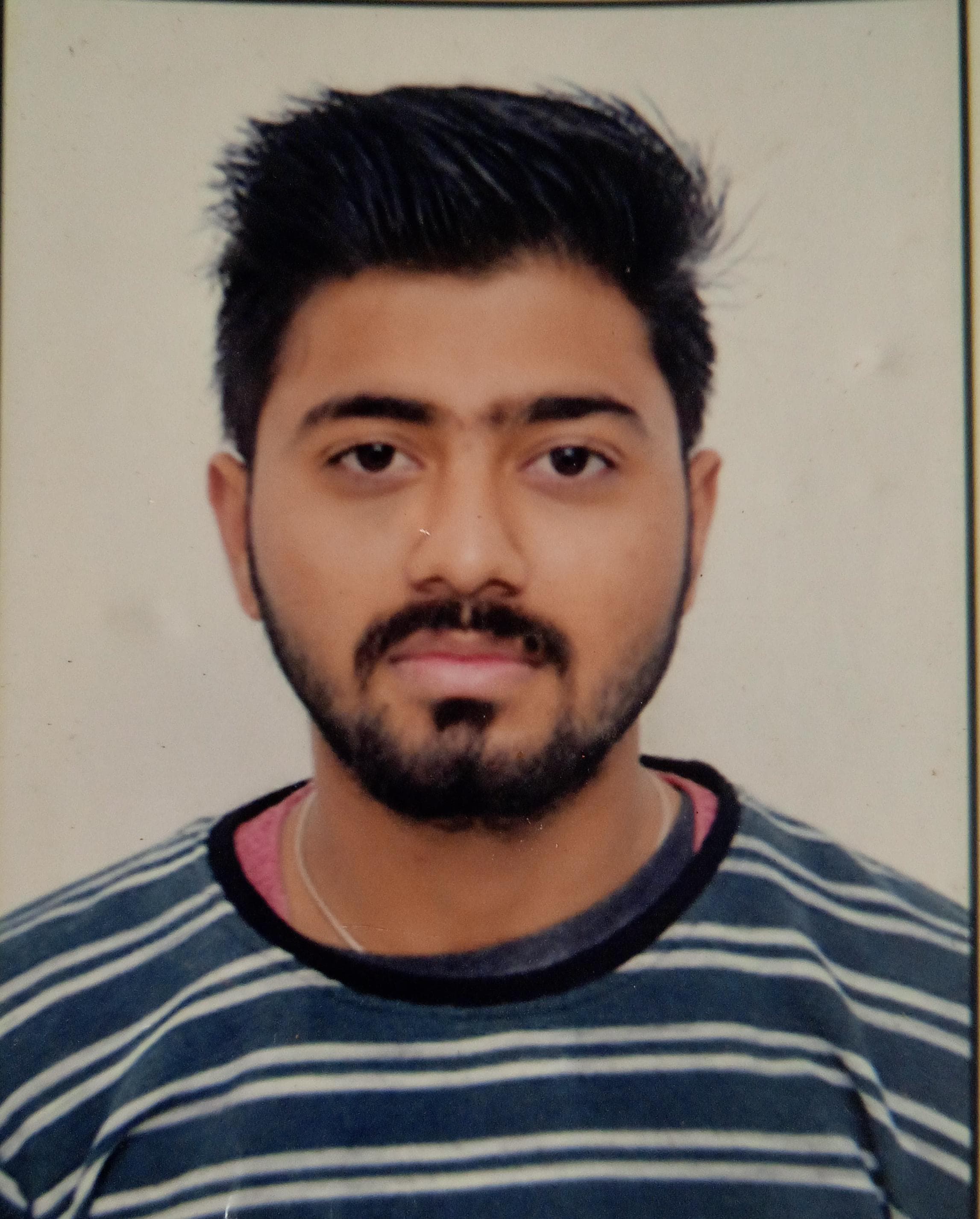
Mr. Jai Kumar Saini
Technical Assistant
Fungal Division, Characterization Services
: Jaikumar.saini@imtech.res.in
: 01722880702

Mr. Gagandeep Singh
Cyanobacteria, Photobacteria & Extremophiles
: Gagan.singh.imt@csir.res.in
: 01722880703

Ms. Girja Ditya
: Girja@imtech.res.in
: 01722880703

Ms.Renu Sharma
Senior Technician
Yeast Section
: Renu@imtech.res.in
: 01722880732

Ms. Kavita Kumari
: Kavita@imtech.res.in
: 01726665151


